|
Choosing a new mattress often means comparing different materials and technologies. Memory foam has been widely used in mattresses for decades, while grid mattresses offer a different approach to cushioning and responsiveness. If you are comparing a memory foam mattress to a grid mattress, there is no single material that will suit everyone. The right option for you depends on your sleeping position, preferred level of cushioning, temperature preferences and the support system beneath the comfort layers. Understanding how the two options differ can help you choose a mattress that provides the right combination of comfort and support. |
Jump to: What is a memory foam mattress? |
What is a memory foam mattress?
Memory foam is a type of polyurethane foam (or polyfoam) with viscoelastic properties. In simple terms, this means it responds gradually to pressure and conforms or moulds to the shape of your body.
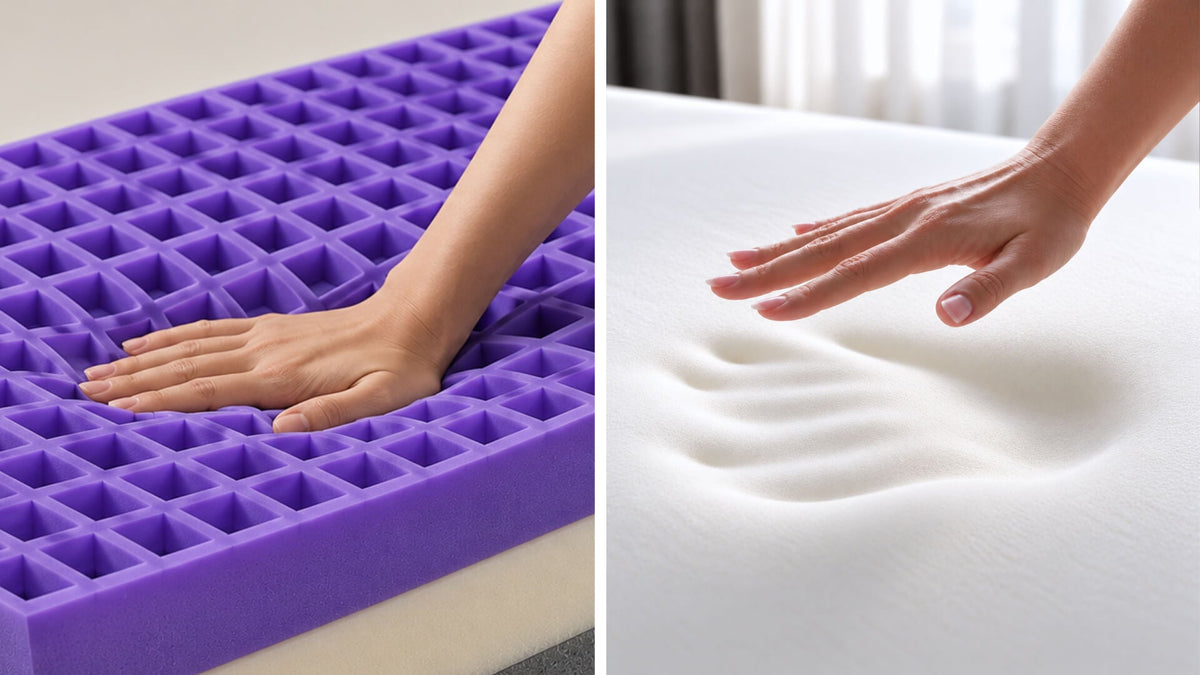
One of the main benefits of memory foam is its distinctive feel. Rather than immediately springing back against your body, the material allows you to sink in, cushioning areas such as the shoulders and hips and distributing pressure across the sleep surface. This creates the close, enveloping sensation commonly associated with memory foam.
Types of memory foam mattresses vary depending on the density, thickness and placement of the memory foam within the layers. Some mattresses combine different kinds of foams, while others use a layer of memory foam on top of a spring support system, transforming the mattress from a purely foam bed into a hybrid mattress. All of these variables can significantly affect how the finished mattress feels.
How is latex foam different from memory foam?
Latex foam is another cushioning material used in mattresses, but it has a different feel from memory foam. Latex is generally more responsive and springs back more quickly when pressure is removed than memory foam, which responds more slowly and moulds more closely around the body.
When comparing latex foam vs memory foam, temperature and movement can also influence your preference. Latex has an open-cell structure that allows airflow and tends to retain less heat, while its greater responsiveness can make it easier to change sleeping positions. Because it is naturally anti-microbial, latex often suits sleepers who suffer from allergies.
As with memory foam, the comfort material is only part of the equation. The layers and support system beneath influence how supportive and comfortable the finished mattress feels.
What is a grid mattress?
A grid mattress uses a flexible material (such as hyper-elastic polymer) arranged into a repeating grid or lattice structure, typically within the upper layers of the mattress. The grid features open squares that allow air to circulate, and when pressure is applied, the grid can bend or compress.
This creates a noticeably different feel from traditional memory foam. While memory foam tends to contour gradually around the body, a grid layer responds more quickly as you move. Some sleepers prefer the more responsive sensation of a grid, particularly if they change sleeping positions regularly.
As with memory foam, however, the grid itself is only one part of the mattress. The layers and support system beneath it remain important to the overall performance of the bed.

Key differences between foam and grid mattresses
The biggest difference between a grid mattress and a memory foam mattress is how the materials respond to your body and how they feel throughout the night.
| Feature | Memory foam | Latex | Grid |
|---|---|---|---|
| Feel | Deeply cushioning | Springy, responsive | Flexible, responsive |
| Pressure relief | High | High-moderate | Moderate |
| Bounce back | Generally slower | Fast and springy | Generally faster |
| Motion isolation | High isolation | Moderate isolation | Varies |
| Airflow | May retain heat | Promotes airflow | Promotes airflow |
Neither material determines whether a mattress is supportive, soft, firm or suitable for a particular sleeper. A memory foam comfort layer, for example, can be paired with a robust spring system to provide cushioning at the surface and deeper underlying support, such as springs or coils.
Foam, grid and innerspring mattresses
Memory foam and grid materials are typically discussed in terms of surface comfort: how the mattress cushions the body, how it responds to pressure and how it feels as you move. Innerspring mattresses are built around a system of coils that provides underlying support, with comfort layers added above the springs.
This means the categories can overlap. A mattress may combine an innerspring support system with memory foam, standard foam, latex or grid comfort layers, bringing together contouring and pressure-relieving qualities with the responsive support of springs.
For this reason, it is useful to consider what provides comfort at the surface and what provides support underneath. Sealy Posturepedic mattresses are designed around this distinction, using engineered spring systems to support the body and help maintain natural spinal alignment, alongside comfort materials such as memory foam in selected models.
The Sealy Posturepedic Hybrid Memory combines slow-recovery memory foam with AlignSupport coil technology. This allows the memory foam to provide contouring comfort while the spring system performs the primary supporting role. Similarly, the Sealy Posturepedic Hybrid Latex features a deep layer of pure latex to provide dynamic pressure relief above the same coil technology.

Which mattress is better for back pain?
If you experience back pain, look for a mattress that supports your body in totality rather than focusing on a specific type of material.
A well-designed mattress should provide sufficient underlying support to help maintain the natural alignment of your spine. This must also be combined with comfort layers that cushion areas of the body that experience greater pressure. Your body shape, weight and preferred sleeping position can all influence the amount of support and cushioning you need. Learn more in our guide: How to choose the right mattress comfort
At Sealy, more than 50 years of orthopaedic research has helped inform the development of Posturepedic mattresses. Rather than relying on a single comfort material for support, Sealy considers how the entire mattress works together to support natural spinal alignment.
Of course, persistent or significant back pain should always be discussed with an appropriate healthcare professional.
Which mattress is better for hot sleepers?
Temperature can be an important consideration in India, particularly for people who naturally sleep warm. Grid mattresses and latex mattresses have an inherent advantage in airflow because their open structure leaves spaces through which air can circulate. This may help reduce heat build-up immediately around the comfort layer.
Traditional memory foam has a denser structure and conforms closely around the body, so some people find that this material retains heat. However, memory foam technology and overall mattress design vary considerably. Gel-infused foams, breathable fabrics and other temperature-management technologies can all influence the sleep environment.
For example, some Sealy Posturepedic mattresses combine memory foam with cooling technologies. The Hybrid Memory and Hybrid Latex mattresses include IceTouch, a fabric knit that provides a cool initial feel, while the SmarTex fabric treatment moves heat away from the body, providing a cooler night’s sleep even in warmer climates.
Which one should you choose?
Choosing between a memory foam and a grid mattress ultimately comes down to how the complete mattress feels and supports your body.
- Consider memory foam if: you enjoy a close, cushioning feel, want strong pressure relief, or share your bed with someone and value motion isolation.
- Consider latex if: you prefer responsive cushioning, want good airflow or dislike the slower, enveloping feel of memory foam.
- Consider a grid mattress if: you prefer a faster response when moving, dislike the deeper contouring sensation of memory foam, or prioritise airflow through the comfort layer.
However, avoid judging a mattress by one material alone. A high-quality mattress brings together its comfort layers, underlying support system, edge support, fabrics and overall construction to create the finished sleep experience.
Where possible, try different mattresses in person. Lie in your normal sleeping position for several minutes and consider not only how comfortable the surface feels, but also whether your body feels stable and well supported.
Frequently asked questions
|
Is a grid mattress better than memory foam? |
|
What is the difference between latex and memory foam? |
|
Is latex or memory foam better for back support? |
|
What is the meaning of memory foam? |
|
Is memory foam good for back pain? |
|
Is a grid mattress good for hot sleepers? |
|
Is memory foam suitable for India's climate? |
|
Should I choose a memory foam or spring mattress? |